“Can we do more sales posts?”
It’s a fair question. You’re investing in marketing, and you want people to buy. So when your agency suggests a recipe, an entertaining video or a story about the people behind your product, you might wonder what any of that has to do with sales.
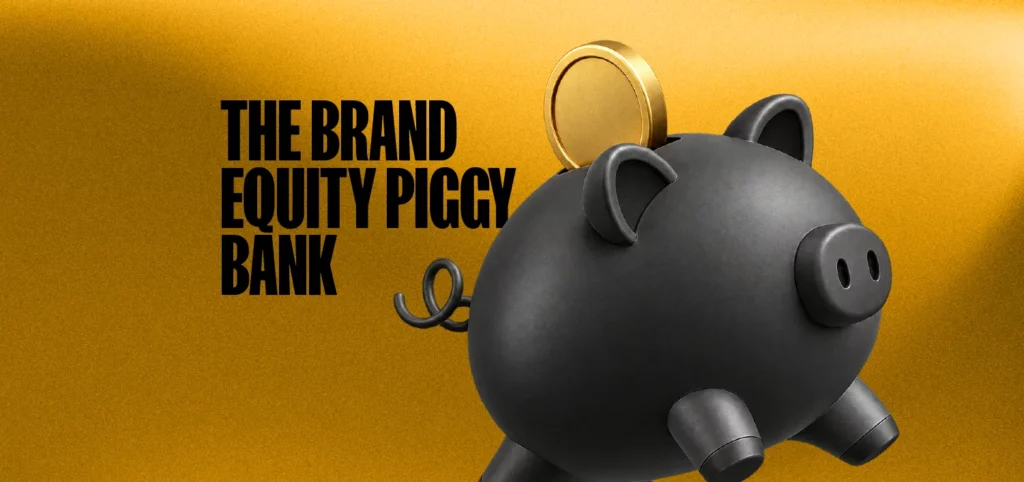
I have this conversation quite often. And I usually explain it with a piggy bank.
Imagine every brand has one.
Every time you give people something worthwhile, you have an opportunity to put something in. A useful tip. A laugh. A recipe they’ll actually make. A story that reminds them of home. A good experience with someone on your team.
Over time, those deposits build familiarity, trust and affection. People start recognising you, understanding you and finding reasons to choose you.
That’s a simple way of thinking about brand equity: the value your name adds to what you sell.
WHAT ARE YOU PUTTING IN?
A lot of marketing asks something of people.
Buy this. Book now. Sign up. Visit our showroom. Give us your email address.
None of that is wrong. Businesses need to sell. But imagine having a friend who only calls when they need something. Eventually, you see their name on your phone and know exactly where the conversation is going.
Brands can become that friend.
Every post is a product. Every message is an offer. Every interaction is another request to spend. Then we wonder why people ignore us unless we’re giving something away.
Giving can be much simpler than a discount.
A Christmas advert might give someone a moment of entertainment. A recipe might solve tonight’s dinner. An explanation might help them make a better decision. A familiar scene might make them smile and think, “That reminds me of my nanna.”
The audience gets something from the interaction, even if they don’t buy today.
That is a deposit.
Of course, the fact that you publish something doesn’t automatically make it valuable. The deposit happens when it means something to the person receiving it.
A JAR OF KUNSERVA HAS A STORY BEHIND IT
Our work with Vera is a good example.
Vera produces kunserva, sugu and caponata using Maltese tomatoes and vegetables. When they came to us, they had been trading for decades with very little advertising and no established marketing channels.
There was a product and a story behind it, but much of that story wasn’t reaching people.
During a tasting exercise we conducted with 50 people, we found that many participants didn’t even know Vera was Maltese.
That mattered. Local produce and the farmers supplying it were meaningful parts of the product, yet people couldn’t value what they didn’t know.
So our work involved giving those stories a place to live.
We documented the journey from seed to kunserva, interviewed Maltese farmers and showed the production process. We developed social content around the food, its origins and the familiar ways people enjoy it.
And we connected it to something people already felt.
Because kunserva, for many of us in Malta, comes with memories. Bread prepared by your nanna. Days at the beach. Simple food that somehow tastes better because of where you are and who you’re with.
There was plenty to talk about before asking someone to put a jar in their basket.
The commercial ambition was still very clear: try Vera. Give it a place at your table.
But we were building reasons for that invitation to matter.
WHAT CAN YOU DO WITH BRAND EQUITY?
Eventually, you need to ask.
You want someone to choose your product over the familiar alternative. Try something new. Book your service. Trust your recommendation. Spend their money with you.
This is where the balance you’ve built becomes useful.
You’re approaching someone who already has a sense of who you are and what they can expect from you. The conversation has a starting point.
That accumulated trust can help you launch a new product because people are willing to give it a chance. It can support a higher price because they see value beyond the specification. It can encourage recommendations because customers feel confident putting their own name behind yours.
It may even earn you some patience when you make a mistake, provided you take responsibility and put it right.
For me, that is what a brand’s tribe looks like in practice. People choose you consistently. They recommend you. Their relationship with you continues beyond the next promotion.
You haven’t bought their loyalty with a few entertaining posts. You’ve given them reasons to keep choosing you, then reinforced those reasons through experience.
“BUT I NEED SALES THIS MONTH!”
Of course you do. Filling the piggy bank cannot become an excuse to avoid commercial responsibility.
When a business needs an immediate response, we need to create something that gives and asks at the same time.
An offer is an obvious example. You give someone a price advantage in return for acting. A sample lets them experience the product before committing. A useful demonstration helps them understand whether something is right for them, while giving you an opportunity to sell it.
There is a balance within the activation itself.
The problem starts when that becomes your entire relationship with the market. If the only compelling reason to buy is the next offer, you can end up teaching people to wait for it.
And yes, some products arrive with such a strong answer to an unmet need that the reason to buy is immediately obvious.
But most businesses operate in a world of perfectly acceptable alternatives. In that world, “we also sell this” gives people very little reason to change their habits.
YOUR CUSTOMER EXPERIENCE HOLDS THE BALANCE
The piggy bank analogy has one important limitation: a purchase doesn’t automatically empty it.
A good purchase can be your next deposit.
The product does what you promised. Someone answers a question properly. Delivery is straightforward. After-sales support makes the customer feel looked after.
All of that gives people more confidence in choosing you again.
The opposite is also true. You can spend months presenting a warm, caring brand, then undo that work with a rigid, dismissive experience when someone needs help.
Marketing brings people into the relationship. The business has to hold up its end.
BUILD IT DELIBERATELY
Brand equity takes shape through what people repeatedly see, hear and experience. You can influence that deliberately, or leave much of it to chance.
For business owners, the piggy bank is a useful way to question the balance.
Are we giving people reasons to care? Are we delivering on what we say? Are we building a preference that lasts beyond an offer?
Or are we simply asking louder and more often?
Look at the last ten things your business put out.
How many gave people something? And how many just asked?